
Modi's arrival has changed the optics of the visit. There is a different demonstration of the confidence level in the Indian leadership, but not much has changed beyond that, reports Sheela Bhatt/Rediff.com.

Prime Minister Narendra Modi on Friday said bilateral cooperation in defence manufacturing would be the "prime focus" of his visit to the United Kingdom.

'It is in electronics that the gap between where we are and where we need to be is most obvious and most persistent.' 'It is not only a national security issue, but also a commercial issue,' argues Rajeev Srinivasan.
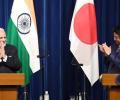
'Relations between India and Japan are robust and devoid of either shadow of history or any irritant.' 'In fact, there is plenty of warmth and goodwill earned over history. There are no negatives but only opportunities,' notes Dr Rajaram Panda.

'This is the only place on earth where Elephas maximus climbs to these heights.'

'This is a historic juncture when the US is in great need of an alliance with India to strengthen its hands in the fierce struggle with China in the Asian theatre,' points out Ambassador M K Bhadrakumar.

'Without doubt, General Bajwa has deliberately snubbed India.' 'But why did he do that?' 'The Male leadership is simply fed up with Indian interference,' says Ambassador M K Bhadrakumar.

What gets forgotten in the German vs Sanskrit debate is the poor standard of teaching in India.
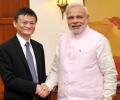
Alipay payment service is about bringing the world's consumers and businesses together.

Nearly two decades ago, then defence minister George Fernandes said: 'China has built roads up to the border, while there has been negligence on India's part.' Since Fernandes uttered these brave words, what has been done on the Indian side? The Modi Sarkar is apparently trying, but little has been achieved so far, says Claude Arpi.
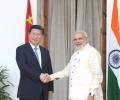
With the continuing stand-off in Ladakh casting a shadow over the Sino-India talks, Prime Minister Narendra Modi on Thursday raised 'serious concerns' over the repeated incidents along the border and sought an early settlement of the boundary question.

'... it must network its battlefield units quickly, securely, robustly,' notes Ajai Shukla.
.jpg)
Congress has questioned Prime Minister Narendra Modi's "absence" in Delhi and his engagement in state election campaigns at a time when unabated ceasefire violations continued from across the border.
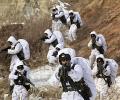
In all the noise surrounding the Dok La confrontation, Claude Arpi focuses on a crucial issue that has hardly been covered -- the construction of roads for the armed forces and the local population to reach the most remote border posts.

'Make in India is one of the priorities identified by Minister Sitharaman and this is our great weakness,' warns Vice Admiral Premvir Das.

When asked if the Indian investigating agency would be allowed to visit Pakistan, Basit said that 'the whole investigation is not about reciprocity in view'.

Rajasthan has taken the lead on structural reforms which could help India attract business and employ a fast-growing workforce.

'India missed the software products revolution (and now is in danger of missing the platform revolution), complacent that we are the software experts of the world based on IT services prowess,' points out Rajeev Srinivasan.

While the Rafale deal seems to be the main order of business during French President Francois Hollande's visit, other aspects could help sweeten the deal, says Claude Arpi.

'There are hundreds of items from Madhya Pradesh, Andhra, Rajasthan, Gujarat in Subhash Kapoor's loot. The Tamil Nadu Idol Wing wants to just prosecute Kapoor for three cases and close it. To me that's myopic.'

'India-US defence pacts are seen by many analysts as a subtle move to jointly contain China's growing militarism, especially in the strategic Indian Ocean Region.'

The India that needs strategic alliances, defence cooperation and engaging meaningfully with neighbouring countries is quietly moving ahead with confidence, says Tarun Vijay

'The creation of Pakistan was integral to Britain's grand strategy.' 'If they were to ever leave India, Britain's military planners had made it clear that they needed to retain a foothold in the NWFP and Baluchistan because that would provide the means to retain control of Iran, Iraq, Kuwait, the UAE, Bahrain and Qatar.'
 © 2026 Rediff.com - Advertise with us - Disclaimer - Privacy Policy - Sitemap - Feedback - About us - Terms of use - Grievances